



About 55% of renters in the US don't carry renters insurance, according to data from the Insurance Information Institute. That's a remarkable gap, given that the average annual premium in 2022 was $171 per year — roughly $14 per month — according to NAIC data published by the III (iii.org). The cost barrier isn't the real explanation. The real explanation is a set of durable renters insurance myths about what coverage does and doesn't exist, who needs it, and why the landlord's policy already handles everything. These myths persist because they sound plausible and nobody corrects them until a claim gets denied.
This article goes through the most expensive misconceptions, with specific detail on what a standard HO-4 renters policy actually covers and where the real gaps are.
Renters Insurance Myths That Cost You the Most Money
The myths that cost renters the most aren't obscure misunderstandings about policy language. They're foundational beliefs about how property insurance works — beliefs that lead people to skip renters insurance entirely or buy inadequate coverage.
The single most expensive belief: that the landlord's insurance protects you. It doesn't — not for your belongings, not for your liability, not for temporary housing costs if your unit becomes uninhabitable. The landlord's policy covers the building. Period.
A close second: the belief that renters insurance is too expensive to justify. At $14/month national average, renters insurance is cheaper per month than most streaming service subscriptions. Yet nearly one in two renters goes without it. The math doesn't add up unless those renters genuinely believe they have no financial exposure — which almost none of them do.
Understanding which renters insurance myths are most damaging requires walking through them specifically, not just listing them. Each one has a concrete mechanism through which it fails you financially.
Myth 1: My Landlord's Insurance Covers My Belongings
Your landlord carries insurance on the building itself: the structure, the roof, the walls, the fixed appliances. Their policy does not cover your furniture, your electronics, your clothing, your jewelry, or anything else you own. If a pipe bursts in the unit above yours and water destroys your laptop and your couch, your landlord's insurer owes you nothing. Their obligation is to the building, not to the contents you brought in.
The same applies to fire, theft, vandalism, and most other covered perils. If the building burns down, the landlord's policy rebuilds the structure. You get nothing for your personal property unless you have your own renters policy.
This isn't a technicality buried in fine print. It's the fundamental design of property insurance: the owner insures what they own. The landlord owns the building. You own your stuff. Two different people, two different insurance needs, two different policies. The fact that you pay rent doesn't transfer the building owner's insurance coverage to your personal property.
Myth 2: Renters Insurance Is Too Expensive to Be Worth It
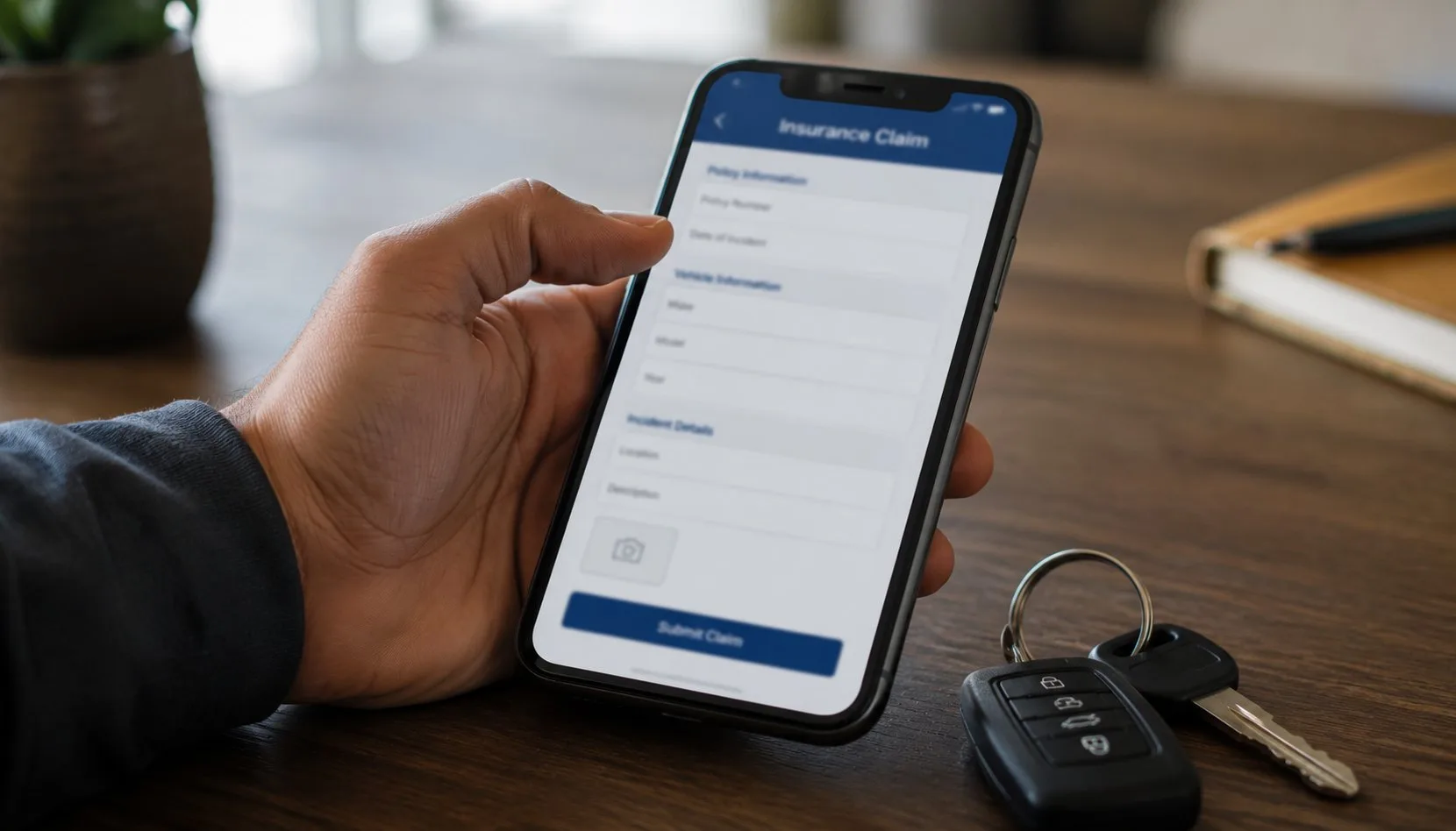
At a national average of $171/year in 2022 — approximately $14/month — renters insurance is one of the least expensive insurance products available. This NAIC data is published at iii.org and represents the most recent detailed national figure; premiums in 2025–2026 may differ, so get a current quote from carriers in your zip code.
State-by-state variation is real: Mississippi had the highest average renters premium at $262/year in 2022, while North Dakota had the lowest at $123/year (NAIC data via iii.org). Even the most expensive state average runs roughly $22/month. Most urban renters pay somewhere in the $15–$25/month range for standard coverage.
For comparison: a $1,000 claim for stolen electronics — one that a renter without insurance would pay entirely out of pocket — equals five to seven years of renters insurance premiums at typical rates. A $5,000 loss from water damage or fire would exceed lifetime payments for many policyholders.
The cost-benefit calculation almost always favors buying the policy. The argument against is usually one of the other myths, not actual price.
Myth 3: I Don't Own Enough Stuff to Bother Insuring
Most renters significantly underestimate the replacement cost of their possessions when asked to think about it informally. The mental accounting tends to go: "I have a bed, a couch, some clothes, a laptop." The actual inventory, when listed methodically, typically includes:
- Electronics: laptop, phone, television, gaming console, speakers, headphones, camera
- Clothing and footwear: replacing a full wardrobe often runs $3,000–$8,000 or more
- Furniture: couch, bed frame, mattress, dresser, desk, dining table and chairs
- Kitchen equipment: small appliances, cookware, utensils, food processor
- Bicycle, if applicable — often worth $500–$2,000 or more
A genuine room-by-room count for a modestly furnished one-bedroom apartment tends to land in the $10,000–$25,000 range. A renter with good electronics, a reasonable wardrobe, and standard furniture may have $20,000–$40,000 in possessions — far above what most people intuitively estimate before they do the count.
Standard renters policies set coverage limits for specific high-value categories. Jewelry, watches, and fine art typically have sublimits (often $1,000–$1,500 for jewelry) within the overall personal property coverage. If you own items worth substantially more than those sublimits, you need scheduled personal property endorsements (floaters) that explicitly list and insure specific high-value items. The base policy alone won't cover a $5,000 engagement ring without separate scheduling.
Myth 4: The Liability Coverage Isn't Important for Renters

Personal liability is the part of a renters insurance policy that most renters pay the least attention to and that can matter most in absolute dollar terms.
The liability portion of an HO-4 policy covers you if someone is injured in your apartment or if you accidentally cause property damage to someone else's property. Standard policies typically include $100,000 in liability coverage, with options to increase to $300,000 or $500,000 for modest additional premium.
Here's the scenario: a guest slips on your wet kitchen floor and breaks their wrist. The medical bills, lost wages, and potential legal fees can accumulate quickly. Without renters insurance, you're paying those costs personally. With it, your liability coverage handles them up to the policy limit.
The coverage also extends beyond your apartment in some circumstances. If you cause damage to a neighbor's property — a fire that spreads, a bathtub overflow that damages the unit below — liability coverage can address those third-party property damage claims. The policy typically also covers your legal defense costs if someone files a lawsuit against you for a covered incident.
An umbrella liability policy extends coverage beyond the base renters policy limit, typically starting at $1,000,000 of additional coverage for a modest annual premium. Umbrella policies require an underlying renters (or auto) policy to attach to. For renters with assets worth protecting, the combination of a renters policy with an umbrella makes more sense than a bare minimum approach.
Myth 5: Renters Insurance Covers Everything That Goes Wrong
Standard renters insurance policies cover specific named perils or, in broader policies, all-risk minus named exclusions. What they typically don't cover:
Floods. A renters HO-4 policy does not cover water damage from flooding — external water entering the unit from storms, overflowing rivers, or storm surge. Flood insurance for renters is available separately through the National Flood Insurance Program (NFIP) or some private carriers. If you rent in a flood-prone area and don't carry separate flood coverage, your possessions are unprotected against flood-related losses.
Earthquakes. Standard policies exclude earthquake damage. Earthquake endorsements or separate earthquake policies are available, particularly in western states, for additional premium.
Mold. Most policies exclude mold damage, particularly mold that results from maintenance neglect or long-term moisture problems. Sudden water damage (a burst pipe) may be covered; gradual mold accumulation typically isn't.
Car contents. Items stolen from your car are generally not covered by a standard renters policy, or are subject to a separate sublimit. Your auto insurance — specifically full-coverage auto insurance — typically handles theft from a vehicle. If your laptop is stolen from your car and you don't have full-coverage auto insurance, you may find neither your renters nor your auto policy responds to the claim.
High-value items above sublimits. Base coverage limits for jewelry, firearms, business equipment, and collectibles are typically far below what many renters actually own in those categories. Know your sublimits before you need to file a claim.
Myth 6: Actual Cash Value Coverage Is the Same as Replacement Cost Coverage
The difference between replacement cost and actual cash value coverage is significant and often not explained at purchase.
Actual cash value (ACV) pays you the depreciated value of your belongings at the time of loss. A 5-year-old laptop that cost $1,200 might have an ACV of $400. A 10-year-old couch might have an ACV of $150. The payout is what the item is worth now, not what it would cost to replace it.
Replacement cost coverage pays what it actually costs to replace the item with a similar new one. For that same laptop, the payout is the current price of a comparable device — $800–$1,200 depending on what's available now.
Most people who've never filed a claim don't realize they bought ACV coverage until the claim payout is far below what they expected. A household with $20,000 in possessions might have an ACV of $8,000 after accounting for depreciation — and that's what ACV coverage pays.
For most renters, the premium difference between ACV and replacement cost coverage is modest — often $50–$100/year more for replacement cost. The difference in a major loss scenario can be thousands of dollars. Get the quote for replacement cost coverage specifically, not just the cheapest available option.
The Insurance Information Institute at iii.org publishes plain-language explanations of what standard policies cover and what common endorsements address, including the most current NAIC premium data by state.
What to Do After Buying a Policy: The Inventory Step Most Renters Skip
The policy only pays what you can document. After purchasing renters insurance, the single most useful follow-up action is creating a home inventory — a room-by-room record of your possessions with estimated replacement costs, serial numbers for electronics, photos or video of the space, and receipts or purchase records where you have them.
A home inventory makes filing a claim dramatically faster and reduces the risk of disputes with the insurer over what you actually owned. Without one, you're reconstructing from memory after the fact — which means you'll almost certainly forget items and likely undervalue what you've lost. The inventory doesn't need to be formal: a walkthrough video saved to cloud storage, narrating what's in each room, accomplishes most of what a spreadsheet does with less effort.
Store the inventory offsite or in cloud storage. If the fire or theft that triggers the claim also destroys the device where your documentation lives, the inventory isn't recoverable. Several insurance companies offer free home inventory apps; many also accept documentation sent directly through their claims portal.
Update the inventory annually and after major purchases. A $2,000 television you bought after the original inventory isn't documented and could complicate a claim if it's stolen. The update takes 15 minutes if done regularly.
Finally, ask your insurer about additional living expenses (ALE) coverage — the portion of your policy that pays for temporary housing, meals, and related costs if your apartment is uninhabitable due to a covered loss. Standard policies typically include ALE equal to 20–30% of your personal property coverage limit. If your personal property limit is $25,000, ALE coverage of $5,000–$7,500 may be available. That's not unlimited — a major displacement lasting months can exceed typical ALE limits in high-cost cities. Understand the limit and period of coverage before a claim arises, not after.
The insurance coverage that seems expensive to maintain is almost always far cheaper than the scenario it prevents you from paying out of pocket. Renters insurance, at $14/month national average, is one of the clearest illustrations of that principle in personal finance.
None of this is financial advice. Your situation depends on variables this article can't see — taxes, risk tolerance, time horizon, dependents. A fiduciary advisor can model your specific case.




No comments yet