



Most budgeting systems fail at the same point: the month starts with good intentions and ends with a vague sense that money vanished somewhere. digital cash stuffing fixes that by giving every category of spending its own virtual container with a hard ceiling — the same logic that made physical envelopes work for decades, rebuilt for a world where most transactions happen on a screen. Whether you use a dedicated app or a zero-based budgeting tool, the mechanics are the same: money goes into buckets before it gets spent, and when a bucket hits zero, you stop.
What Is Digital Cash Stuffing and Where Did It Come From?
The original envelope system dates back at least to the mid-20th century and was popularized later by personal finance teachers like Dave Ramsey. The concept: withdraw your paycheck in cash, label envelopes by category (groceries, gas, eating out, fun), and stuff the right amount into each one. Once an envelope empties, that category is closed for the month.
The TikTok version of this practice exploded around 2022–2023 when creators began sharing their weekly stuffing routines — pastel binders, gold-label stickers, satisfying camera pans across a spread of organized envelopes. The hashtag accumulated billions of views as Gen Z and Millennials discovered a budgeting method that was visual, tactile, and oddly satisfying to watch. By 2025, the trend had shifted into a second wave, with economic anxiety and persistent inflation pushing more people toward deliberate, category-based spending.
The problem with physical cash stuffing in 2025 is the same one the envelope system always had: most spending no longer involves cash at all. Online grocery orders, subscription services, rideshares, and digital bill pay all require a card. A May 2025 Federal Reserve report noted that the majority of US consumer transactions are now non-cash. Stuffing physical envelopes and then running a card for everything else creates a tracking gap that defeats the purpose.
Digital cash stuffing is the solution. You keep the category-based pre-allocation logic but apply it to virtual envelopes inside an app. Your paycheck lands in your bank account and gets immediately divided into labeled buckets — rent, groceries, dining out, clothing, emergency fund — and every transaction pulls from the right bucket. When a bucket hits zero, the app tells you before you overspend, not after.
The psychological benefit survives the transition. Studies on consumer behavior consistently find that pre-commitment to spending limits reduces impulse purchases even when the money is not physically visible. Apps reinforce this by showing color-coded balances, warning notifications, and real-time running totals rather than a silent bank balance that tells you nothing about category health.
How Digital Envelopes Actually Work, Step by Step

The mechanics are straightforward but the details vary by app. Here is the general workflow:
Step 1: Set income and period. Most apps ask you to enter your expected monthly or biweekly income before building the budget. YNAB is the exception — it only lets you assign money you currently have, not money you expect to receive.
Step 2: Create categories and fund envelopes. You build a list of spending categories and assign a dollar amount to each. The total of all envelopes should equal your income for the period, leaving zero unassigned. This zero-based approach is what separates envelope budgeting from simple tracking apps that only report what already happened.
Step 3: Record transactions. As you spend, you log each purchase against the right envelope. Many apps link to your bank account and auto-import transactions, but you still confirm which envelope each purchase comes from. Manual entry, while more work, has an advantage: the act of logging every purchase maintains awareness that auto-import can erode.
Step 4: Handle overspending. When one envelope runs short, apps handle it in a few different ways:
- Transfer funds: Move money from an envelope with slack (say, you underspent on gas this week) into the depleted category. YNAB and Goodbudget both support this.
- Red envelope warning: Goodbudget turns envelopes red when they go negative, giving a clear visual signal without blocking you.
- Carry-forward deficit: Some apps subtract the overage from next period's envelope balance in the same category, automatically building in a correction.
- Virtual card controls: Some newer budgeting-plus-banking tools can connect a debit card directly to an envelope balance, blocking transactions once that envelope hits zero — the closest digital equivalent to literally running out of cash.
Step 5: Review and refund at period end. At month's end, you look at what is left in each envelope. Unused grocery money can roll over, go to savings, or reduce next month's envelope. Seeing which categories consistently come in under or over budget tells you where your original estimates were off.
YNAB, Goodbudget, and EveryDollar: How the Main Apps Compare

Three apps dominate the digital envelope space. They share the same core philosophy but differ significantly in price, flexibility, and approach to bank syncing.
YNAB (You Need a Budget)
YNAB is the most opinionated of the three. Its core rule is that you can only budget money you already have. If you have $2,800 in checking today, you assign exactly that $2,800 across categories. When your next paycheck arrives, you budget that new money separately. This forces you to live on last month's income over time — a goal the app treats as an achievement milestone.
As of 2025–2026, YNAB costs $109/year billed annually (equivalent to roughly $9.08/month) or $14.99/month on the monthly plan. A 34-day free trial requires no credit card. Bank syncing is included in the base subscription — no upgrade needed. The app supports up to 6 family members under one subscription at no extra cost, and college students with a valid .edu email get 12 months free through the YNAB college program.
YNAB's strength is its reporting. The age-of-money metric, spending trend graphs, and category-level histories make it easier to spot patterns over time. The learning curve is real — the rule about only budgeting real money confuses new users — but once the approach clicks, users tend to stay for years.
Goodbudget
Goodbudget is the most faithful digital translation of the original envelope system. Where YNAB treats envelopes as budget categories that can be refilled freely, Goodbudget's envelopes feel more like literal pockets of money. You fund each envelope at the start of the period and spend from it.
The free tier is unusually generous: 10 regular envelopes, 10 annual envelopes (useful for irregular expenses like car registration or holiday gifts), and syncing across up to 5 devices. Couples can share and sync budgets between their phones without both needing paid accounts. The paid Plus tier removes envelope limits and adds more device sync slots and two years of spending history.
Goodbudget does not sync to bank accounts directly — all transaction entry is manual or imported by file. That limitation is a feature for some users: manual entry is the moment of deliberate acknowledgment that makes spending feel real. For others, it is a deal-breaker after a week of forgotten receipts.
Overspending shows up as a red envelope balance. You can transfer between envelopes to cover a shortfall, but the app does not hide the fact that you exceeded the limit — the color change is persistent until you fund the envelope from somewhere.
EveryDollar
EveryDollar comes from Ramsey Solutions and reflects Dave Ramsey's financial philosophy, including the zero-based budget model. The free version lets you build a manual budget, track spending by category, and see remaining balances. The premium upgrade — priced at around $79.99/year as of the most recently published rates — adds bank account syncing, which auto-imports transactions and matches them to budget categories.
The key difference from YNAB's approach: EveryDollar asks for your expected monthly income upfront and has you allocate that full amount. If you expect $4,000 this month, you assign $4,000 even if $1,500 of it has not arrived yet. This works well for people with stable salaried income but can create friction for freelancers or those with variable pay.
EveryDollar's interface is the simplest of the three — intentionally so. The Ramsey audience skews toward people getting out of debt rather than optimizing an already-functioning budget, and the app's guided walkthroughs and baby-step integration reflect that focus.
Quick Comparison
| YNAB | Goodbudget | EveryDollar | |
|---|---|---|---|
| Free tier | No (34-day trial) | Yes (10 envelopes) | Yes (manual only) |
| Annual price | ~$109/yr | Free or Plus (check site) | ~$79.99/yr (Premium) |
| Bank sync | Included | No (manual entry) | Premium only |
| Income approach | Assign real money only | Fund envelopes manually | Assign expected income |
| Overspend handling | Transfer between categories | Red envelope + transfer | Adjust budget lines |
| Best for | Detail-oriented long-term budgeters | Couples, envelope purists | Ramsey followers, simple needs |
Physical Envelopes vs. the Digital Version: An Honest Look
The physical version has one advantage that no app can fully replicate: the pain of handing over cash. Behavioral economics research consistently shows that paying with physical money activates a loss response more strongly than swiping a card. When a grocery envelope only has $40 left and you are standing at the register, you make different decisions than when you are checking a number on a screen.
That said, the practical disadvantages of physical cash stuffing are significant in 2025:
Security risk. Physical cash in a home is not FDIC-insured, earns no interest, and cannot be recovered if lost or stolen. Insurance typically has sub-limits for on-premises cash.
Online spending is excluded. Subscriptions, e-commerce purchases, digital services, and bill pay all require a card or bank account. A strict cash-only practitioner either maintains a parallel tracking system for those purchases or ignores a large slice of their spending.
ATM logistics. Weekly cash withdrawals sorted by category require a trip to the bank or ATM plus time to count and sort. Withdrawal fees add up across the month if your bank's ATM network is limited.
No record-keeping. A lost receipt or forgotten expense simply disappears from physical envelopes. There is no transaction history to review, no spending pattern to analyze.
Digital cash stuffing accepts a slightly weaker psychological signal in exchange for much stronger practical coverage. Research cited in the physical-vs-digital comparison literature suggests that at the six-month mark, people who started with a digital system maintain their savings habits at a higher rate — likely because the convenience removes the friction points that cause people to abandon physical cash entirely.
The hybrid model that many personal finance writers now recommend: use cash envelopes for the two or three categories where you most consistently overspend (often dining out, entertainment, or convenience shopping), and manage everything else digitally. The tactile restraint where you need it most, the tracking and coverage of a full digital system everywhere else.
When Digital Cash Stuffing Works — and When It Does Not
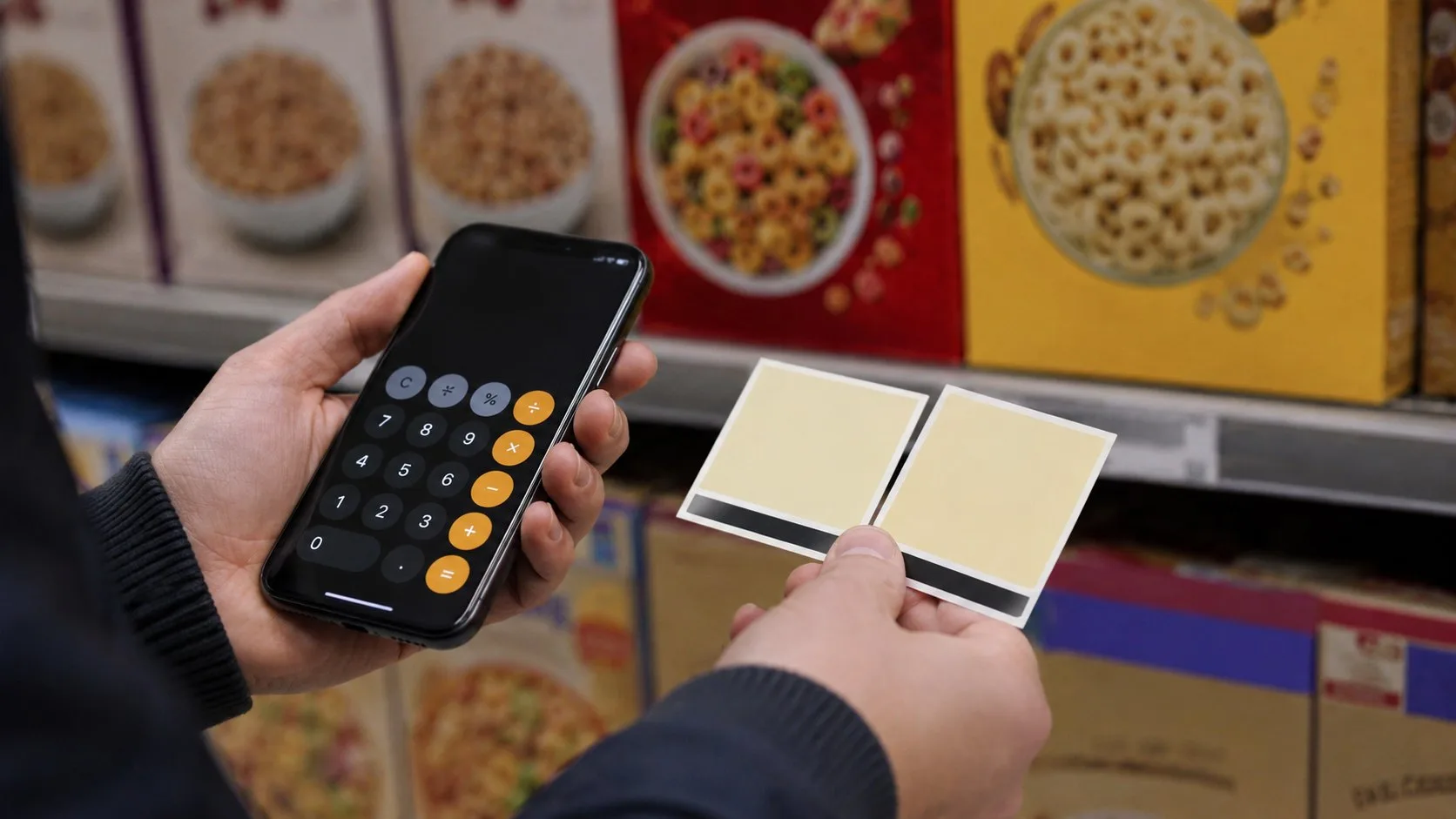
Digital cash stuffing is a strong match for people who:
- Know their approximate monthly income in advance
- Tend to overspend in specific categories rather than across the board
- Want a method that requires active engagement rather than passive tracking
- Are building their first real budget and need the structure of pre-allocation
It works less well for:
Variable or irregular income. Freelancers, contractors, and gig workers can adapt by budgeting conservatively — only funds already received, as YNAB requires — but need to re-fund envelopes as income arrives throughout the month.
People who want purely passive tracking. If the goal is to see where money went after the fact without changing behavior, a transaction-categorization app serves that purpose with less setup.
Couples who have not aligned on spending priorities. Digital cash stuffing requires shared agreement on how much each category gets. Couples who have not had that conversation often discover it through the conflict of disputed envelope transfers — which can be productive, but is not always welcome.
For anyone who has tried general budgeting apps and found them discouraging because they only show you what already happened, digital cash stuffing provides a structural difference. The pre-commitment happens at the beginning of the month, not the end. That order-of-operations change is what gives the envelope method its behavioral edge. You are not reviewing your spending; you are directing it before it occurs.
Getting Started Without Overthinking It
The first month does not need to be perfectly calibrated. Start with 10 to 15 categories maximum. Common groupings:
- Housing (rent or mortgage, utilities)
- Groceries
- Transportation (fuel, transit, parking)
- Dining out
- Health and personal care
- Subscriptions and entertainment
- Clothing
- Emergency fund contribution
- Savings goal (vacation, large purchase, debt paydown)
- Miscellaneous buffer
Pull three months of bank statements before setting envelope amounts. Most people underestimate grocery and dining budgets by 20–30% on their first pass because they forget small purchases that accumulate — coffee stops, convenience store runs, last-minute lunch orders. NerdWallet's envelope system guide recommends averaging actual past spending by category rather than guessing what you wish you spent.
Choose one app and run it for 90 days. Resist switching after the first frustrating week. Most envelope budgeting apps have a 30- to 45-day calibration period while your category amounts get dialed in. The second month is almost always easier than the first, and by month three you will have real data to work from.
The TikTok creators stuffing their pastel binders every Sunday are doing something more durable than an aesthetic exercise — they are building a pre-commitment habit that interrupts the default spending-first, regret-later cycle. The digital version of that habit travels with you in your pocket and works whether you are paying at a register, checking out online, or scheduling a subscription renewal. That portability is what makes digital cash stuffing the practical evolution of an idea that was already working.
None of this is financial advice. Your situation depends on variables this article can't see — taxes, risk tolerance, time horizon, dependents. A fiduciary advisor can model your specific case.



No comments yet